
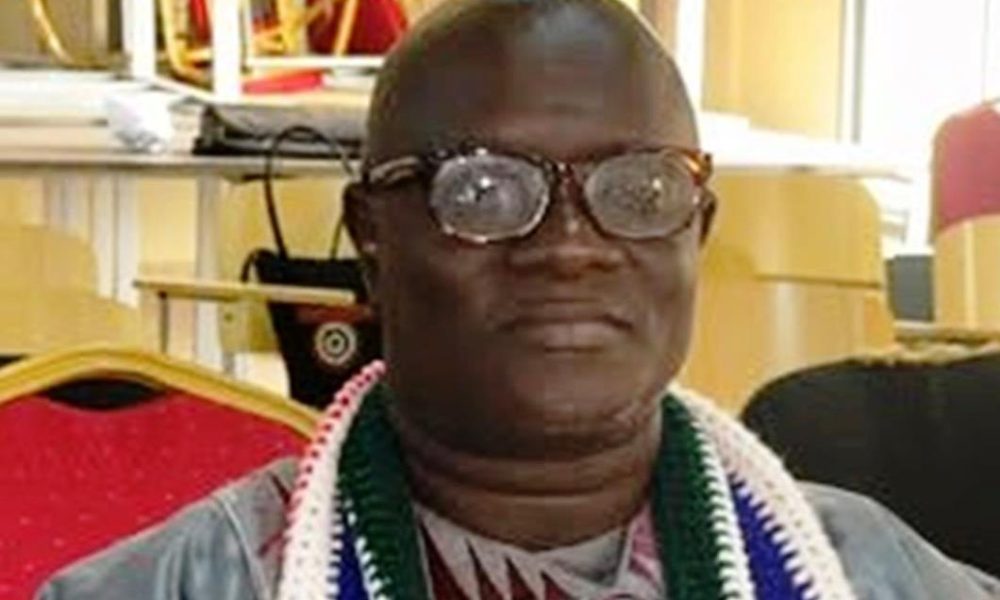

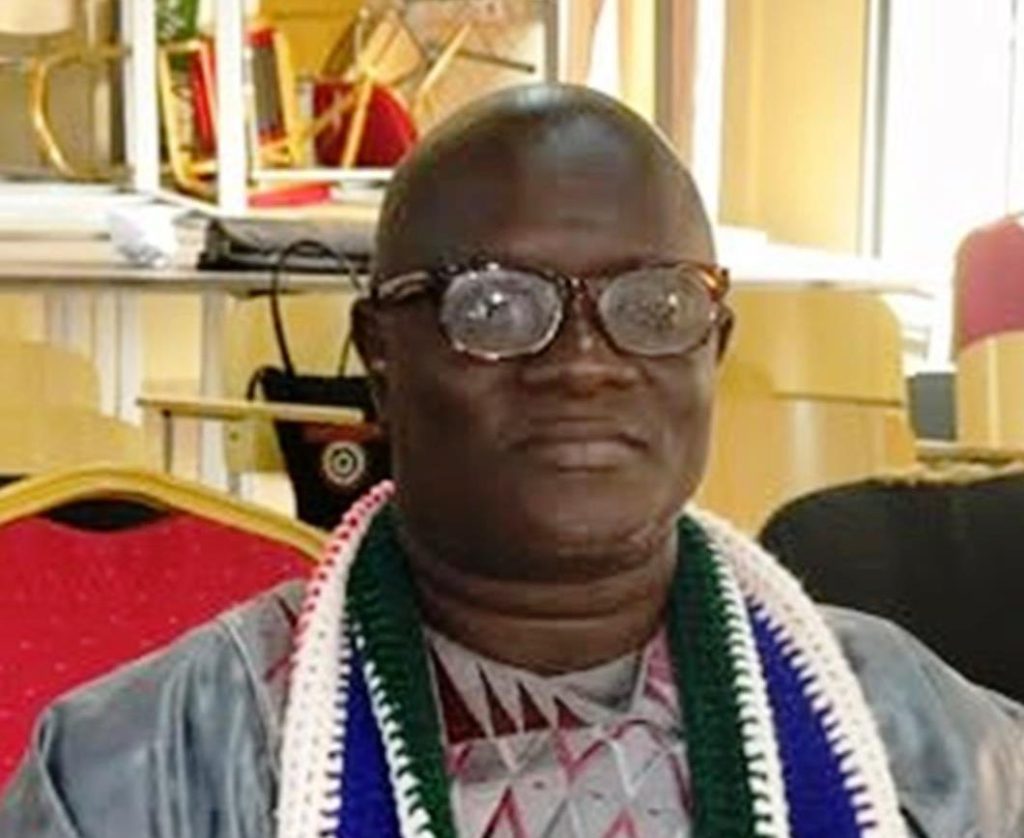
One of Gambia’s most outspoken human rights activist, Madi Jobarteh, Director of Edward Franci Small Center for Rights and Justice (EFSCRJ) has said that after sixty-one years, the Gambia remains highly indebted, aid-dependent, tax-burdened, and yet persistently impoverished and corrupt in lived reality.
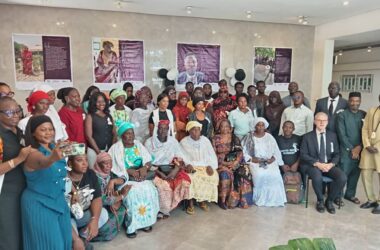
Jobarteh made this statement at the ‘Independence Democracy Forum 2026’ themed: ‘61 Years of Independence: Democracy, Governance, and the Future of the Republic’ on February 16, 2026 at the Law Faculty of Univertity of The Gambia.
He noted: “On 18 February 1965, we gained independence. But independence was treated primarily as a constitutional transfer of authority, not as a civic transformation.”
Below is the statement in verbatim.
My Beloved Compatriots,
On behalf of the conveners of this forum, EF Small Centre for Rights and Justice, Never Again Network, Solo Sandeng Foundation, Gambians Against Looted Assets (GALA), UTG Student Union, Malagen, Askanwi Media, Info-Checked and Team Gomsa Bopa , I warmly welcome you to the Independence and Democracy Forum 2026.
We gather today not merely to commemorate sixty-one years of independence, but to examine it. Independence is not an annual ritual. It is a permanent obligation. It is not the lowering of one flag and the raising of another; it is the sustained construction of a republic that protects dignity, guarantees justice, and delivers shared prosperity.
It is therefore fitting that we meet here at the University, the citadel of learning, research, and reason. Nations correct their course through critical thought, historical awareness, and civic courage. Universities must nurture not only careers, but character, not only knowledge, but responsibility.
Sixty-One Years: The Unfinished Question
After sixty-one years, the Gambia remains highly indebted, aid-dependent, tax-burdened, and yet persistently impoverished and corrupt in lived reality. This is a structural contradiction. We are well endowed with natural and human resources, yet governance outcomes do not reflect that potential.
Our present condition did not begin in 2017, nor in 1994. Its roots trace back to 18 February 1965. At independence, and certainly by 1970 when we became a republic, this nation required a foundational national conversation to ask the fundamental questions:
• What kind of republic did we want?
• What kind of citizen did we need?
• What values would define the Gambian state and society?
Emerging from slavery and colonialism, systems that disrupted our political evolution and fractured our social fabric, we inherited a colonial state with all the paraphernalia of monarchy imposed upon us. With low literacy levels and limited institutional capacity, the urgent task was not simply political independence, but civic reconstruction. That conversation never took place.
Missed Turning Points: 1965, 1970 and Beyond
Our history has presented us with critical moments for national redefinition. The most decisive of these were 1965 and 1970.
1965 – We Gained Political Independence Without Civic Reconstruction
On 18 February 1965, we gained independence. But independence was treated primarily as a constitutional transfer of authority, not as a civic transformation. The colonial state structure remained largely intact. Administrative systems, legal frameworks, and sociopolitical hierarchies were preserved.
What was required at that moment was a foundational national conversation:
• What kind of republic should replace the colonial state?
• What civic values must define the new Gambian citizen?
• How do we dismantle inherited systems of division and inequality?
Instead, we transitioned into self-rule without reimagining the character of the state or the nature of citizenship.
1970 – Republic Without Reorientation
In 1970, we became a Republic. This was an even greater opportunity for constitutional and civic renewal. Becoming a republic should have triggered a comprehensive societal dialogue about sovereignty, equality, and national identity.
A republic is not merely the absence of a monarch; it is the assertion that the people are supreme. Yet the transformation from colony to republic did not fundamentally redefine power relations, governance standards, or social justice commitments.
We gained republican status, but we did not reconstruct the republic.
1981 – Crisis Without Structural Reform
The events of 1981 signaled deep dissatisfaction within segments of our society. It was a warning that something was fundamentally misaligned. Rather than undertaking a national diagnostic process, we moved forward with limited institutional adjustments.
1994 – Coup Without National Reflection
The military coup of 1994 exposed institutional fragility and political decay. Commissions were established, but again, there was no broad-based citizen dialogue to redesign the state.
The transition to the Second Republic occurred without addressing foundational structural issues.
2017 – Transition Without Transformation
The democratic transition of 2017 marked a historic victory for popular will. Transitional justice mechanisms were established. Civic space expanded. Fear receded.
Yet nine years later, while institutions have changed, the deeper civic and structural transformation remains incomplete. Transitional justice must do more than prosecute and compensate, rather it must reshape culture, governance norms, and citizen-state relations.
The Pattern
Across 1965, 1970, 1981, 1994, and 2017, one pattern emerges:
We respond to crises.
We establish commissions.
We move forward.
But we do not fundamentally reimagine the republic.
The most consequential missed opportunities were 1965 and 1970, because those were foundational moments. If the foundation is weak, each successive reform sits on unstable ground.
The question before us today is whether we will continue this pattern or finally undertake the deep national conversation that has eluded us for sixty-one years.
To further elucidate and better comprehend these issues, one has to look into our constitutions.
From 1965 through 1970 and into the 1997 constitutional order, our governing frameworks largely preserved a powerful, centralized state rather than constructing a sovereign citizen at the core of the republic.
Independence in 1965 transferred authority from colonial administrators to local elites, but it did not fundamentally restructure the architecture of power.
The 1970 Republican Constitution, while symbolically severing monarchical ties, maintained a dominant executive and inherited institutional hierarchies.
The 1997 Constitution, emerging from military rule, restored multiparty politics yet again entrenched expansive presidential powers.
Across these constitutional moments, the emphasis remained on state control and executive authority, not on diffusing power, deepening accountability, or cultivating empowered citizenship as the primary source of sovereignty.
This persistent state-centric design lies at the heart of our national malaise. A democratic state is not defined merely by periodic elections, but by the primacy of citizens whose rights, agency, and participation shape governance. When constitutional arrangements concentrate authority rather than disperse it, institutions become vulnerable, accountability weakens, and public trust erodes.
The result is a republic where sovereignty is proclaimed in law but diluted in practice, where the state remains strong, yet the citizen remains structurally fragile. Until constitutional reform places the sovereign citizen, not the powerful executive, at the center of governance, our democratic project will continue to struggle to deliver justice, equality, and shared prosperity.
The Structural Problem
The central challenge in our republic is not only political but it is also sociocultural.
While Section 1(2) of the Constitution affirms that sovereignty resides in the people, lived reality tells a different story. Our society remains deeply unequal and exclusionary. Citizens continue to face marginalization based on tribe, gender, religion, disability, caste, origin, age, and economic status. Patriarchy and entrenched sociocultural hierarchies distort the promise of constitutional equality.
Democracy cannot flourish where society itself is structurally unequal.
These issues, ladies and gentlemen highlight the importance, urgency, and necessity of a national dialogue. Such a national dialogue cannot and should not be controlled by the Executive, but people driven.
For this reason, the EF Small Centre submitted a position paper to the Office of the President calling for the restructuring of the National Dialogue launched in 2024. While we welcome dialogue in principle, such a process must be anchored in law, i.e., established by an Act of the National Assembly, governed by clear terms of reference, and bound by a defined timeframe. Only then can it facilitate an authentic national conversation aimed at building a just and inclusive republic.
Why This Forum Matters
This Forum does not claim to replace a national dialogue. It seeks to ignite one.
We call upon Gambians at home and in the diaspora to organize similar forums, to create spaces for frank, citizen-led reflection about the state and future of our republic. Nation-building is not the exclusive duty of government. It is the shared responsibility of every citizen.
The Gambia is not insulated from global pressures, be they economic volatility, geopolitical shifts, climate vulnerability, among other factors. In such a context, silence is irresponsible and dangerous. We require honest debate about how to safeguard unity, stability, and prosperity.
Across the First Republic, the Second Republic, and the post-2017 transition, progress has occurred. Civic space has widened. Fear has receded. Expression is freer.
Yet poverty persists. Youth unemployment remains high. The cost of living strains households. Public service delivery is uneven. Institutions are fragile. Corruption endures. Public trust remains shallow.
Democracy cannot survive on ceremony and symbolism. It must produce results.
This Forum is neither defiance nor ceremonial, but a demonstration of duty and patriotism required of each and every Gambian. We are here to question, to challenge, to listen, and to propose.
At the conclusion of our deliberations, we will adopt a Citizens’ Charter for Democratic Renewal and National Dignity as a living document articulating shared values, defining expectations of public authority, and clarifying our own duties as citizens.
We state unequivocally that Democracy belongs to the people, who bear the primary duty to defend, protect and deliver it. therefore, we are here to repair our own house, to define our own standards, and to claim our own future.
Conclusion
I thank each of you for being present, not as spectators, but as stakeholders in the destiny of this nation.
Let us engage with intellectual honesty.
Let us disagree with respect.
Let us deliberate with courage.
And let us depart with clarity and commitment.
It is my honor to formally declare the Independence and Democracy Forum 2026 open.


